


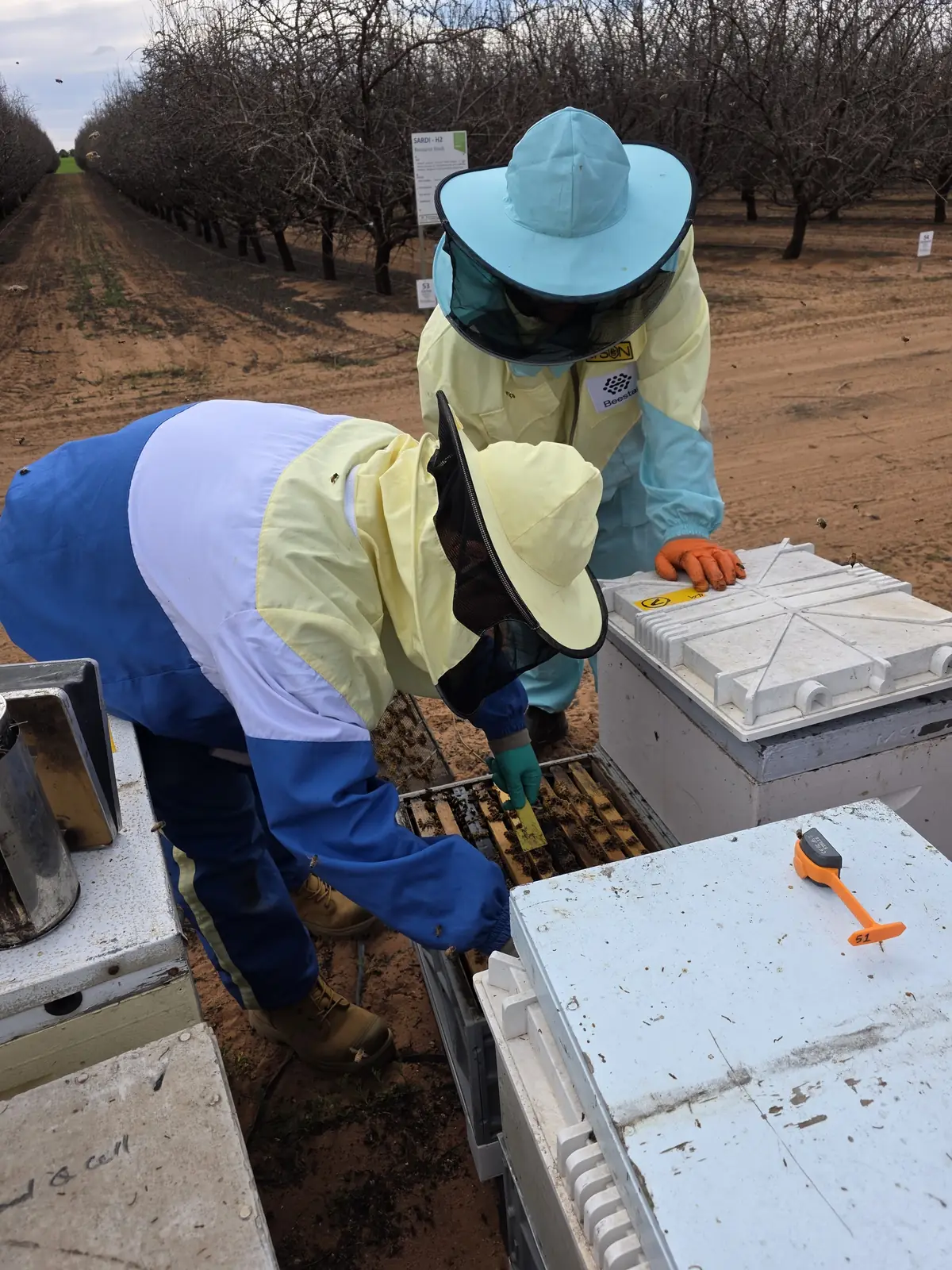
BeeSTAR released version 2.0 of its app in June, the first fully commercial release of the platform. The update is built on more than two years of continuous data collection and analysis across real commercial hives, and on sustained feedback from the beekeepers who used earlier versions in the field.
Designed around the beekeeper
Nearly every function in v2.0 exists because working beekeepers asked for it. The app is organised around the decisions a commercial operator actually makes, hive by hive and up to load by load, and it deliberately strips away everything that does not lead to a decision.
“Most technology in this industry has been engineer driven. Version 2.0 is built entirely around the working beekeeper: the most intuitive, fastest possible decisions, hive by hive and load by load, with essential information only. Time is the one thing a commercial beekeeper cannot buy back.”
Ray Kwon, Founder and CEO, BeeSTAR
Validation as the headline feature
The central theme of the release is data validation. In user sample testing, data accuracy was measured above 90 percent, and v2.0 ships with features built specifically to keep verifying that accuracy in the field and to track the rate of false positives over time. Kwon described validation as the release’s most important goal, and the basis on which BeeSTAR intends to lead the industry.
Open to all beekeepers
The most significant change in v2.0 is who can use it. The app is now free for every beekeeper, not only those running BeeSTAR IoT sensors. Any operator can manage colonies and keep records in the app at no cost, alongside fully monitored hives. One commercial beekeeper in New South Wales, running a mixed fleet of monitored and unmonitored hives, reported that managing every colony in a single app was reason enough to order additional sensors.
Toward v3.0
BeeSTAR is currently testing voice activated inspection features to make hands free record keeping possible at the hive, and development of version 3.0 is under way for release early next year. Version 3.0 is planned to introduce beekeeping domain specific AI built on the company’s Large Hive Model, trained on more than three years of real hive data.